


The lover of God is not distracted by light or by darkness;
both are veils before the Face.Rābiʿa bint Ismāʿīl al-Mahdiyya
Your remedy is within you, yet you do not perceive it.
Your ailment is from you, yet you do not sense it.
Do you suppose you are an insignificant entity,
while within you the vast cosmos is enfolded?
You are the Book made manifest,
through whose letters the hidden becomes known.
You have no need to look beyond yourself.
The truth you seek is within, if only you reflect.Imām ʿAlī (عليه السلام)
Grant me the gift of a tongue of veracity
that can give expression to the witnessing of Truth,
and distinguish me with clarity and eloquence
from the all-inclusive Words.
Protect me in all my utterances from claiming
that which is not mine by rights,
and make me speak according to inner vision,
I, and those who follow me.Muḥyī al-Dīn Ibn ʿArabī
To encounter the lives of saints is to be invited into knowledge that is lived. Within the Islamic epistemology, ways of knowing have long been many, some lean on ḥadīth, others on reason, and still others on modern inquiry, but the path of ʿirfān, of gnosis, the path of the ‘awliya, the “friends of God,” is experiential: it unveils rather than explains, never limited to abstract theology.
My own orientation emerges from the Sufi tradition, whose concern has always been less about systematizing knowledge and more about embodying it. As a transpersonal psychology practitioner, I read these teachings not as abstract beliefs, but as living psychologies of wholeness, ways of being that cultivate balance, presence, and meaning.
Of the four epistemic paths, ḥadīth, reason, philosophy, and ʿirfān, it is the path of the ʿārif and the awliyāʾ that remains part and parcel of the tradition since its inception, moved by grace, not wrought memorization, dry ritual, or dense scholarship. It is a path open not to everyone, but to anyone whose heart is stirred by love, sincerity, and longing for the Real.
This piece arises from a wider collective turn toward the sacred, a return to the language of the Divine. I write as a way to contribute to that turning, to help cultivate discernment, lest the errors of earlier ages repeat themselves, only magnified in a world where knowledge waxes as wisdom wanes.
Wisdom, like the moon, does not vanish; it only hides its face. Those who know how to look with the eye of the heart still find its light reflected in the most unassuming places, in the simple art of living one’s own life, not another’s.
Sufi saints are first known as lovers of the Divine before they become scholars or writers. Many never sought to articulate what they had witnessed of Being. They lived in remembrance that the visible world is but a veil over an immense, invisible correspondence.
In contemporary spiritual and therapeutic circles, energetic portals once guarded by initiation are sometimes opened without lineage, integration, or ethical containment. At times these openings can fragment rather than reveal (see “The Nature of Madness”), leaving many vulnerable to what moves within the unseen, sometimes with disastrous consequences.
The topic of jinn, “entities,” or “black magic,” is often approached from two dichotomous standpoints: either from complete materialist skepticism that denies all unseen realities, or from fear-based superstition that obsesses over protection rituals bypassing necessary psychological work.
With sincerity and integrity, one may find connection to a more balanced and grounded approach rooted in an authentic tradition.
Simply put, whether metaphysical beings “exist” is not the point here. What matters is that people experience them vividly, consistently, across cultures and eras. Taken together, they form a kind of living phenomenology of the unseen, experiences that gesture toward a deeper dimension of consciousness, one that cannot be neatly reduced to hallucination or conflated with dogma.
After publishing “Jinn, Jesters, and DMT Entities,” I received messages from readers across the world sharing their encounters with subtle beings during both induced or non-induced altered states.
These subtle presences, at times deceptive, at times illuminating, may serve as mirrors, revealing the terrain of the soul as much as they reflect the worlds beyond it.
Introduction
In the Sufi tradition, the ‘awliya, the “friends of God” or saints, are those whose hearts have been purified enough to perceive the unseen (al-ghaib) order behind appearances. Their lives embody an ethics of presence and service. Across centuries, such figures have been regarded as custodians of spiritual balance.
And though the word walī belongs to the Sufi lexicon, saints appear in every tradition, those rare beings whose inner surrender becomes a conduit for mercy. Whether called ṣiddīqīn, bodhisattvas, tzaddikim, or holy fools. Some are hidden, moving quietly among ordinary people, their sanctity veiled from those around them. Others are known, recognized by communities drawn to their light. Some live as simple folk, unknown outside their villages; others are people of knowledge, wealth, and authority.
What unites them is not station or visibility, but alignment with the Divine will, a life lived in perpetual remembrance (dhikr).
Just as many Indigenous elders say that true shamans are rare today, many Sufis admit likewise that those who reach the stations of mastery are few. There may be countless saints—known and unknown—for sainthood belongs to God alone to bestow. Anyone may be a friend of the Divine. But those whose realization ripens into complete awareness (insan al-kamil) are rare.
It is from this station of cosmic stewardship that Ibn ʿArabī writes, not from mere speculation or intellectual philosophy, but from direct witnessing (mushāhada) of how spirit, matter, and consciousness interrelate in the vast architecture of being.
Before modernity and colonial disruption, such mystical unveilings were regarded not as superstition but as indigenous ways of knowing, a relational epistemology.
Scholars such as Vincent Cornell, Talal Asad, and Amira Mittermaier have shown that colonial modernity did not merely suppress and orientalize Sufism; it also redefined what counted as ‘real’ or ‘rational,’ pushing the imaginal (‘alam al-khayal, as Ibn ʿArabī called it) to the margins of human experience.
The seeming unraveling of taṣawwuf, the Classical Arabic word for Sufism, however, was not only imposed from without. There were also shadows within, betrayals, distortions, excesses, and practices that drifted from the Prophetic ﷺ core. Yet, as history continues to teach us, throwing out the baby with the bathwater has never been the path of wisdom.
With this spirit I turn to Ibn ʿArabī’s Futūḥāt al-Makkiyya (“The Meccan Openings”), particularly his meditations on the nature of the arwāḥ—the subtle spirits of fire and light—within the vast cosmology of being. I read the original Arabic text and tried to systematize the author’s reflections. Any interpretive errors are mine alone.
The Futūḥāt is not a mere compendium of doctrines but a map of consciousness, a record of unveiling (kashf) that moves between cosmology, psychology, and ontology. Each chapter reflects not theoretical speculation but direct witnessing (mushāhada) of the spiritual worlds, described in the symbolic language of his time.
In approaching these visions today, I do not seek to historicize them but to listen, to read Ibn ʿArabī as a cartographer of the unseen, whose language of light, shadow, and reflection still speaks to contemporary experiences of altered consciousness and transpersonal encounter.
The Divine Contemplating Itself through the Eye of Creation
At the heart of Ibn ʿArabī’s vision, the purpose of the human being is Divine self-contemplation. Creation itself unfolds as tajallī, a theophany, so that the Hidden Treasure (al-kanz al-makhfī) might be known.
“I was a Hidden Treasure and loved to be known, so I created creation that I might be known.”
Humanity is the mirror through which that Knowing occurs.
The Insān al-Kāmil, the Complete Human, stands at the centre of this Divine drama as the eye through which creation looks back at its Source.
Through this being, Allah contemplates Allah, the mirror polished enough to reflect every Divine Name without distortion.
“The Whole Human is the mirror of the Real.”
All other forms of creation, mineral, plant, animal, angelic, or jinn, manifest certain attributes, but only the human being has that capacity to totally constellate them all.
Hence Ibn ʿArabī calls the human being al-kawn al-jāmi’, the comprehensive cosmos [Futūḥāt, II:2–6]. Imam Ali captured this truth in a single luminous saying: “You think you are a small entity, but within you the entire universe is enfolded.”
Through this completeness, the human becomes the place of Divine recognition (maʿrifa): the heart (qalb) becomes a sanctuary where the Real contemplates Its own Beauty and Majesty (see, Metaphysics of Awakening the Heart).
Thus, the purpose of human existence is not external service but interior witnessing through awareness, compassion, and love. Service is only one expression of it.
من عرف نفسه فقد عرف ربّه.
“Whoever knows their self knows their Lord.”
As Seyyed Hossein Nasr observes, this ḥadīth encapsulates the metaphysics of consciousness: “The universe is God’s self-disclosure, and man is the consciousness of that disclosure” (Knowledge and the Sacred, 1981). William Chittick similarly writes, “The Perfect Man is the mirror in which the Real sees Himself, and without that mirror, the cosmos remains a dispersed reflection without self-awareness” (The Sufi Path of Knowledge, 1989).
To live, then, is to participate in this Divine act of self-knowing, to be simultaneously the seeker and the seen, the lover and the beloved, the witness and the witnessed.
At the heart of this luminous order stands the Muḥammadan Reality (al-Ḥaqīqa al-Muḥammadiyya), the first radiance through which all creation was disclosed. The Prophet Muḥammad ﷺ is the archetype of the Insān al-Kāmil, the Complete Human, whose perfection every saint and prophet mirrors according to their capacity.
Through this Reality, the Divine Names are harmonized in the human heart, and through its inheritors the balance of the cosmos is maintained. Through the few who remember perfectly, the cosmos itself continues to see.
The Hidden Hierarchy of Saints
The awliyā’, the friends of God, are the luminous prisms through which Divine awareness circulates in the world. Their existence ensures that mercy continues to descend through living hearts.
Ibn ʿArabī describes this order of sanctity not as a hierarchy of authority, but as an architecture of presence, a living map of proximity to the Real. Each saint (walī) is a locus of a particular Divine Name, reflecting one hue of the Infinite Light.
At its heart stands the Quṭb, the Pole of the age, the Insān Kāmil of that time, through whom the balance of the cosmos is maintained. Around them move other luminous poles, reflections of their station, each sustaining a different sphere of existence.
The Awtād (pillars) uphold the four directions, the Abdāl (substitutes) maintain the flow of succession, and the Nujabāʾand Nuqabāʾ serve as guardians of hearts, lands, and communities. Their work is hidden, yet through them the world breathes.
These circles of sanctity correspond to the prophetic presences (ḥaḍarāt al-anbiyāʾ), spiritual lineages radiating from the realities of Adam, Noah, Abraham, Moses, Jesus, and Muhammad, peace be upon them all. Each embodies a particular mode of Divine relation: creation, endurance, trust, law, spirit, and unification. The Muḥammadan presence ﷺ encompasses them all, the most complete and merciful orbit through which all others take light.
Such assemblies are not councils in space but gatherings of consciousness, dimensions where the realized souls meet in remembrance. In their collective invocation, the Divine beholds Itself through the many eyes of Its friends. Through them, rain descends, hearts find repose, and the unseen remains tethered to the seen.
Some walk among us unnoticed, their sanctity unrecorded; others burn so brightly that history itself bends around them. But whether hidden or manifest, they constitute the secret covenant between the Creator and creation: that the gaze of Love never withdraws from the world.
The Sufi–Gnostic and the Subtle Lineages of the Path
A Sufi is one who refines the ego-self through remembrance and love until the Real (al-Ḥaqq) discloses Itself within. The gnostic (ʿārif) is the one in whom that refinement becomes direct knowing. In Ibn ʿArabī’s language, the Sufi travels toward God, the gnostic travels in God. What begins as discipline becomes perception. Such illumination cannot be forced; it ripens only through surrender. When the heart yields, knowledge flowers into vision, what the masters called kashf, unveiling. Revelation, in this sense, is never achieved but received.
Within this living science of the soul, Ibn ʿArabī describes degrees of alignment among beings of the unseen. Some are born under Divine attraction (majdhūb min al-badʾ), others arrive through discipline (sulūk), but all share a single mark: immaculate surrender, and their wholeness is not in infallibility but in continual return.
The true walī is not the one who never errs, but the one who never stays estranged for long. Even when the heart fractures, the baraka can remain, sometimes shining more brightly, amplified and refracted.
Human knowing itself deepens through the ‘awliyāʾ, for they are the living vessels of taʾwīl, that sacred hermeneutic through which revelation continues to unfold in the heart. In them, meaning is not read but revealed, not argued but witnessed.
This mode of knowing has been largely severed in the modern age, replaced by commentary without presence, intellect without illumination. When I use the word indigenous, I mean this: a way of knowing rooted in the soil of the Real, transmitted through hearts rather than texts. The Awliyāʾ are the custodians of this epistemology, the inheritors of a living wisdom that bridges intellect and spirit, interpretation and unveiling.
Yet this same subtle realm—where meaning becomes power—has always drawn pretenders. Every tradition has its charlatans: those who mimic light but move from self, who perform sanctity while feeding on devotion. This is not new, nor uniquely Muslim. The terrain of spirit is vast, and wherever there is genuine grace, imitation follows.
The integrity inherent in every authentic path expels its counterfeits. In the radiance of al-Ḥaqq, there is no shelter for spiritual self-importance; what is unanchored cannot endure that vibration for long.
Light endures by its Source.
The Rūḥānī, literally “of the spirit,” is one whose awareness has become attuned to the subtle realms. This sensitivity may appear as magnetism, receptivity, or inner sight, but it becomes true rūḥāniyya only when grounded in humility and remembrance.
Among the jinn, too, there are rūḥānīyūn aligned with the Divine order: luminous intelligences of fire and air who, like the saint, live in service to the Real. A rūḥānī jinn of this kind can also become walī min al-jinn, a friend of God among the subtle beings.
All awliyāʾ are rūḥānī, though not all rūḥānī are awliyāʾ.
The Sāḥir (sorcerer), whether human or jinn, mirrors the rūḥānī in access but not in orientation. Where the rūḥānī aligns with the current of Divine will, the sāḥir bends that current toward desire. Their manipulation of subtle forces for vanity, power, or mere material gain veils light with shadow, the condition Ibn ʿArabī calls fatḥ ẓulmānī, the dark opening born of ego-will.
The Saints of the Unseen
It is worth noting that the term rijāl al-ghayb, “the men of the unseen,” is often misunderstood when read through modern gendered lenses. In classical metaphysics, rijāl refers not to biological men but to those who have attained spiritual maturity and steadfastness (rujūla). The Arabic root r-j-l conveys grounding, stability, and presence, qualities of the realized soul, not the body.
In fact, many of the masters held that the feminine principle (quwwa al-qabūl, the power of receptivity) makes women of the unseen even more potent in their spiritual radiance, according to certain perspectives, for the womb itself mirrors the Divine receptivity that receives the Breath of the Spirit (nafkh al-rūḥ).
As Ibn ʿArabī wrote in the Fuṣūṣ al-Ḥikam, “The most complete contemplation of God is in woman,” for she embodies the mystery of receptivity through which creation itself unfolds.
Thus, to speak of rijāl al-ghayb is to speak of the realized souls who sustain the unseen balance of the world, not men or women in form, but beings in whom the polarities of gender are reconciled in unity.
True Light (Fataḥ Nūrānī) vs. False Light (Fataḥ Ẓulmánī)
Light in the metaphysical sense is not the glow of photons, but a mode of being. As Shihāb al-Dīn al-Suhrawardī, founder of the illuminationist (ishraq) school of philosophy, taught, everything exists by virtue of light; what is not light is darkness, a veil upon being. The visible brightness we call “light” is only a reflection of that deeper ontological radiance.
To be more real is to be more luminous.
Within this spectrum of light and being, the mystics speak of two kinds of openings: fatḥ nūrānī, the luminous unveiling that humbles and unites, and fatḥ ẓulmánī, the shadowed or fiery opening that inflates and divides. The first expands the heart’s capacity to receive; the second ignites the self’s hunger to possess. Both may appear radiant, but their fruits reveal their source.
In this cosmology, nūr and ẓulmah are not opposites but degrees of presence and veiling. Nūr is being itself, and ẓulmah—from the same root as ẓulm, oppression—is the self’s contraction against its own light. Saints, emptied of self, become clear vessels of the divine nūr; fiery spirits, still bound by selfhood, burn with their own reflection.
And it is toward these fiery spirits that Ibn ʿArabī now turns, unveiling the metaphysical psychology of the jinn.
On the Nature of the Fiery Spirits
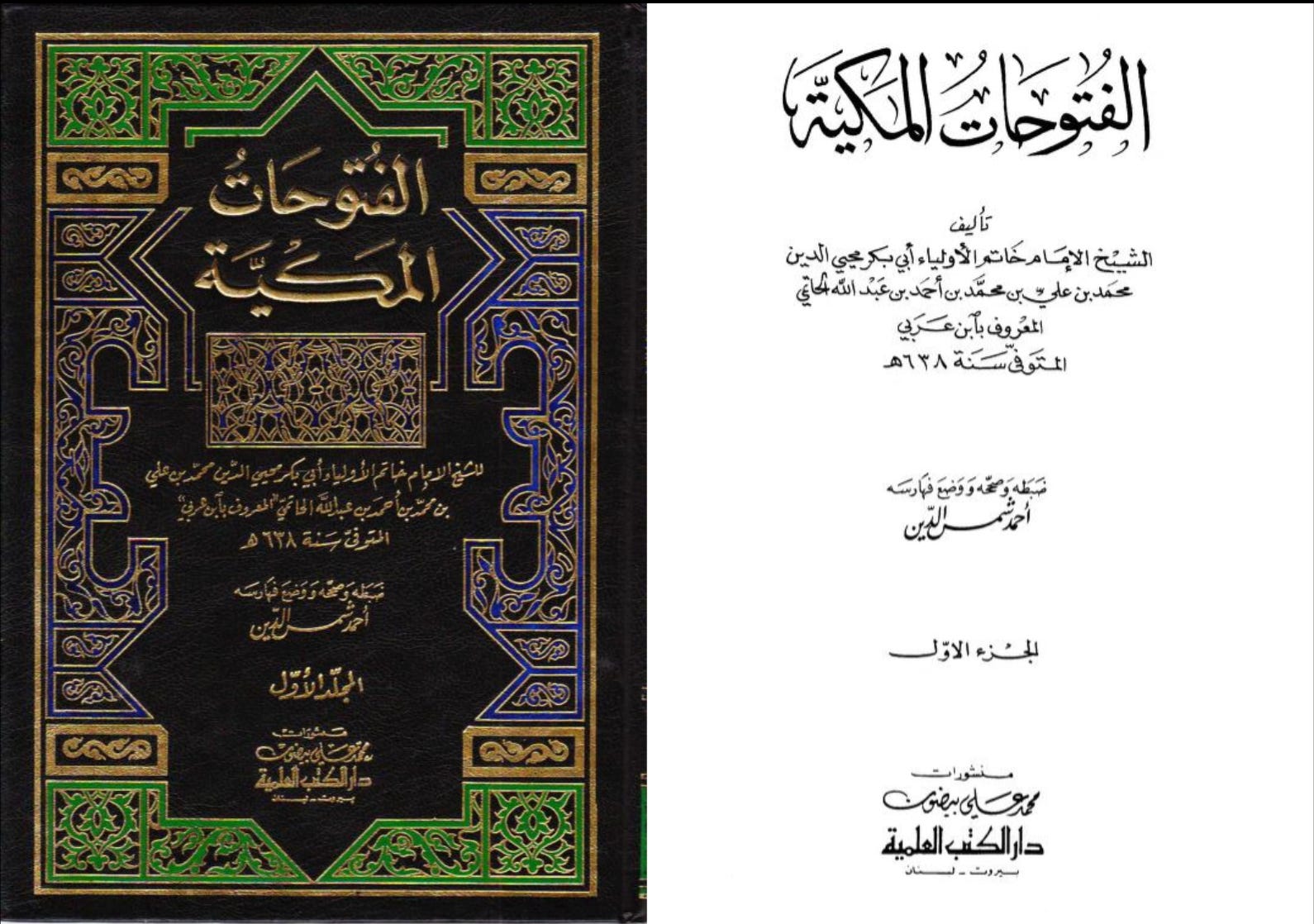
In Al-Futūḥāt al-Makkiyya (The Meccan Openings), Volume I, Chapter Nine, Section Twelve, titled “On the Fiery, Smokeless Spirits” (الأرواح المارجية النارية), Ibn ʿArabī turns his attention to the nature of the jinn. The Futūḥāt itself is his vast spiritual encyclopedia, composed after a series of mystical unveilings (kashf) he experienced in Mecca around 598 AH / 1201 CE.
The chapter referenced in this section is not simply a cosmological account of the jinn; it is a metaphysical psychology of elemental consciousness. His description of beings made of “a smokeless flame” mirrors what depth psychology might call archetypal energies, forces of passion, imagination, pride, and transformation that live both in the cosmos and in the human psyche.
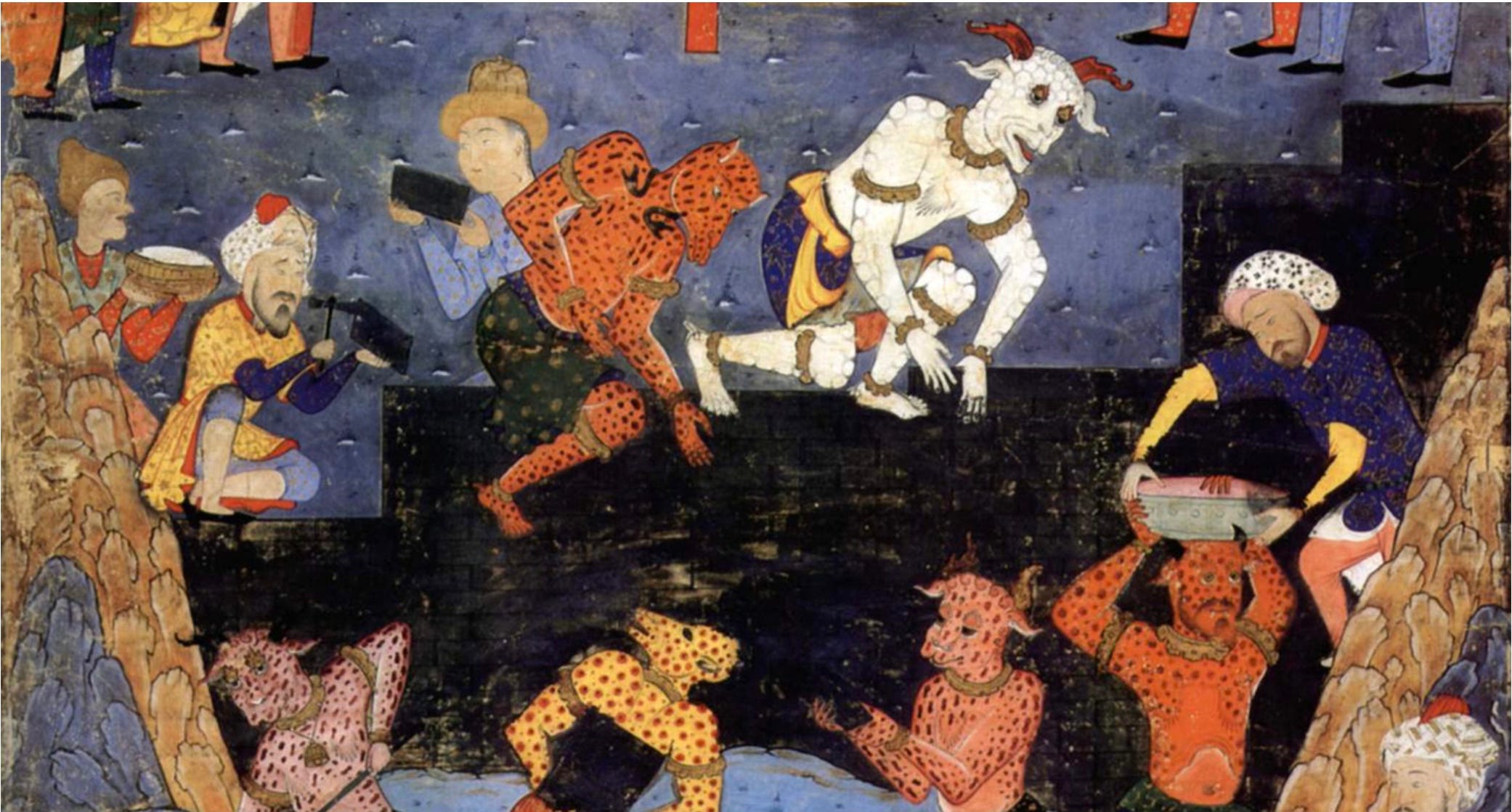
From a transpersonal and Jungian lens, the “fiery spirits” can be understood as reflections of the same energies that the psyche (the soul) engages through the subtle faculties (al-laṭāʾif), movements of consciousness that bridge the instinctual and the Divine, meaning the living Reality of God (al-Ḥaqq), the meeting point of psyche and Spirit.
These sections are my English rendering of Ibn ʿArabī’s text, translated with reverence for its Qurʾānic, prophetic, and symbolic depth. Where the rational mind cannot grasp, the soul may listen.
Written eight centuries ago in Mecca, this work speaks a symbolic language in which revelation and cosmos exist in living correspondence. I note this because, like many of my readers, I am Western-trained and educated; and while that formation carries its gifts, it also confines the ways we know. To truly meet Ibn ʿArabī’s vision, we must soften that frame and allow the knowing of the heart to speak through us.
With that said…
﷽
The Nature of Creation
The Divine says:
“And He created the jinn from a smokeless flame of fire.”
[Sūrat al-Raḥmān, 55:15].
And in the sound ḥadīth:
“God created the angels from light, the jinn from smokeless fire, and the human being from what has been described to you.“
The Prophet ﷺ said, “from what has been described to you,” rather than elaborating, for he was given jawāmiʿ al-kalim (the concise speech that carries vast meaning).
God pointed us toward the diversity of human creation: Adam from clay, Eve from a rib, Jesus from the breath of the Spirit, and the rest of humankind from a mingling of water.
The Formation of the Elements
When God established the four elements, the smoke rose to the concave sphere of the fixed stars. He then separated that smoke into seven heavens, inspiring each heaven with its command, and proportioning sustenance within the earth, all this within four days.
Then He said to the heavens and the earth:
“Come willingly or unwillingly,”
“And they said, “We” come willingly.”
[Sūrat Fuṣṣilat, 41:11]
Thus, between heaven and earth there came to be a hidden bond, a mutual responsiveness through which minerals, plants, and animals are continually born. The act of creation is not a single event but an ongoing dialogue between spirit and matter.
The earth became as a mother, the sky as a father, casting down its rain as seed; and the earth, conceiving, brings forth forms according to Divine decree.
The Birth of Fire and Air
From the interaction of air and fire, the air grew heated and flamed like a lamp, the burning of fire itself. That very burning, that flame, is what the Qurʾān calls marij: the mingling of fire and air. For marij means blending, just as a marj (meadow) is where grasses of all kinds intermingle.
Hence the jinn are composed of two elements, fire and air, just as Adam was composed of water and earth. When water and earth unite, we call it clay (ṭīn طِين); when fire and air unite, we call it marij.
The Creation of the Jinn
Into this marij, God opened the image of the jinn. Through their airy nature, they can assume any form they wish; through their fiery nature, they are subtle, vast, and swift.
From fire comes their impulse toward domination, pride, and exaltation — for fire is the highest of the elements in station. Its power lies in its ability to transform and consume. Because of this, the jinn displayed arrogance when commanded to bow to Adam, saying:
“I am better than he; You created me from fire and created him from clay.”
(Sūrat al-Aʿrāf, 7:12)
Yet the jinn did not perceive that the power of water, from which Adam was formed, is greater, for water extinguishes fire.
Thus Adam was given strength and stability from the dominance of water and earth, while the jinn were given volatility and pride from air and fire. For this reason, Adam was naturally inclined toward humility, while the jinn were inclined toward arrogance, unless grace intervenes.
Their Sustenance
The Prophet ﷺ said that the bones are sustenance for your brothers among the jinn. And indeed, we observe that bones do not diminish in essence when flesh is consumed, which proves that God has appointed in them a provision for the jinn.
A saint once related that he saw the jinn approach bones and smell them as beasts smell carrion, then depart, nourished by that scent.
Truly, God is the Subtle, the All-Knowing.
Their Union and Nations
Their intercourse is like the intertwining of smoke, one current entering another, their pleasure being that mutual penetration. Their fertilization is by scent, as their nourishment is by scent.
They are tribes and nations, twelve root tribes from which many branches descend, and among them are wars and strife. The whirlwinds we see in the desert (zawābiʿ) are sometimes the visible trace of their battles, as two contrary winds meet and clash in circular motion.
When Spirits Take Form
When one of these subtle spirits assumes a visible form, the gaze of the human observing them fixes it, the jinn cannot escape that form while being seen. But when the gaze turns away, the spirit withdraws and the form vanishes.
This is among the Divine mysteries known only through unveiling. The form and the spirit are not separate; they are one reality appearing in many images, just as a single lamp spreads its light into countless corners.
The Angels and the Jinn
The difference between angels and jinn is not only their element but their nourishment. The angels do not eat, as in the story of Abraham’s guests, who reached not their hands to the roasted calf and he feared them (Sūrat Hūd, 11:70).
But the jinn are sustained by what the physical world carries in subtle form, aroma, vibration, and heat.
Thus their life is drawn from what we exhale and burn.
The Hierarchy of Creation
When God willed to create the jinn, He commanded the angels of the first heaven to descend and take from their deputies in the lower heavens what was needed for this new form.
They gathered the essences, shaped the frame, and then the Divine breath, the spirit from the world of command (ʿālam al-amr), was infused. The jinn stood upright, alive, praising their Lord with grandeur, not yet knowing before whom they would later bow.
Among them was one named al-Ḥārith, later called Iblīs, who, upon seeing Adam’s form, felt aversion and envy. When commanded to bow, he refused out of pride in his fiery origin and blindness to the secret of water, the source of all life.
Their Cognition and Character
Because their nature lacks the weight of earth and the softness of water, their reason is light and restless. Hence one says of a foolish person, “His mind is light,” for he carries the temperament of the jinn, and indeed, the Arabic word for madness, junūn (جنون), comes from the same root, meaning to be veiled or concealed.
Their thought is swift but without depth, quick to spark yet unable to dwell. From this came their error:
“I am better than him.”
Ignorance and pride united in that single claim. Whoever among them persists in such defiance becomes a shayṭān, from shaṭa (شَطَ), meaning to burn or to transgress in arrogance, one cast out from Divine mercy.
On Iblīs and His Progeny
The first of the jinn to be so banished was al-Ḥārith, whom God named Iblīs (the despaired one). From him came the shayāṭīn.
Yet not all jinn are devils, among them are believers, such as Hāmah son of Lāqīs son of Iblīs, who joined the faithful jinn. Those who persist in denial remain devils.
Some scholars said, “A shayṭān never becomes Muslim,” but others held that the Prophet’s ﷺ saying, “My devil has submitted,” means his shayṭān believed by grace, not merely ceased to tempt him.
Their Punishment and Elemental Nature
The jinn’s punishment in Hell is mostly by cold (zamharīr), not by heat (ḥarūr), for they are creatures of fire, the cold torments them more.
Humans, whose nature is watery and earthy, are chastised by heat.
Hence, Hell is both burning and freezing, and the name Jahannam itself denotes both terror of sight and depth of distance.
The Spiritual Parallel
The angels are spirits blown into light.
The jinn are spirits blown into wind.
Humans are spirits blown into bodies.
Thus the jinn stand between angel and man, half luminous, half shadowy.
Some say the first jinn was androgynous, self-fertilizing, from whom pairs later emerged, hence their ambiguous nature, resembling both male and female, both angel and beast.
The Inner Meaning
From all this, understand: the fiery spirits are not merely mythic beings, they are living presences between the dense and the subtle, between the seen and the unseen. Their fire is the energy of will and imagination; their air is the field of thought and fantasy.
They can ascend to light or fall into smoke.
Whoever within the human being subdues their fiery impulses and refines them through humility and remembrance transforms the inner jinn into an angelic force.
Whoever is ruled by them becomes a shayṭān unto themselves.
And God knows best.
Ibn ʿArabī often concludes in this spirit: this is enough for now. There is way more in the Futūḥāt al-Makkiyya, and I may continue reflecting on it as I move through its other chapters and various topics.
A Transpersonal Horizon Across Traditions
Carl Jung, in The Red Book, wrestled with his own fiery spirits. The parallel to Ibn ʿArabī is not one of equivalence but of structure: both recognized that consciousness is multi-layered and that the unseen speaks through images.
Though their languages differ, one psychological, the other metaphysical, both approached the imaginal (khayāl) as a real domain of experience. Jung expressed it through the psyche’s symbols; Ibn ʿArabī through the ontology of Being itself.
For Ibn ʿArabī, the psyche (nafs) and the cosmos mirror one another as reflections of al-Ḥaqq, the Real. Consciousness unfolds through divine self-disclosure (tajallī), and the goal of the seeker is realization, the polishing of the heart until it reflects the Divine Names without distortion. Jung, working in a secular age, mapped a comparable interior topography through the collective unconscious, archetypes, and individuation (differentiation versus individualism).
What Jung intuited through the psyche, Ibn ʿArabī had already unveiled through Being. Yet their resonances reveal how Divine wisdom continues to echo, even in the secular age.
Where Ibn ʿArabī saw the soul’s journey as Divine remembrance, Jung understood it as the psyche’s movement toward the Self, the image of totality within. Both framed the imaginal as a real realm mediating spirit and matter: Ibn ʿArabī called it ʿālam al-mithāl, the world of images, while Jung described it as the archetypal or imaginal realm.
Writers such as Henri Corbin, James Hillman, and Robert Sardello have each, in their own way, bridged this terrain between the symbolic, the sacred, and the psychic, showing how imagination can serve as the meeting ground between worlds.
Across the Abrahamic lineages, the cosmology of subtle beings endures. In Judaism, the shedim and ruḥot were said to be made of smokeless fire, born at twilight, capable of both devotion and deceit. In Christianity, the early mystics and Greek Fathers spoke of the daimones, intermediary intelligences neither wholly angelic nor human. Later demonology flattened their metaphysical depth. In Islam, this lineage reached its most intricate articulation: the jinn as subtle, fiery presences, mirrors of the human psyche and its elemental tensions.
Beyond the Abrahamic world, these same presences appear in the yakṣas and asuras of the Indic worlds, the ancestral and plant-teachers of Indigenous cosmologies, and, in modern research, the “entities” encountered in DMT experiences. Jung would have called them archetypal energies or autonomous complexes, forms arising from the collective unconscious yet endowed with intelligence.
From the orientation of transpersonal psychology, spirituality is neither merely psychological nor merely supernatural, but profoundly participatory.
The Imaginal as a Participatory Realm
Whether we name them jinn, daimones, asuras, or archetypes, what we are meeting are the living thresholds of consciousness itself. The task is not to command them but to refine the heart so that it can perceive without distortion.
This, to me, is the true meeting point between Sufi gnosis and transpersonal psychology, not integration, but dialogue: witnessing rather than fear, reverent engagement rather than conquest.
Across traditions and contemporary research alike, the transpersonal dimension of subtle beings, archetypal energies, and altered states of consciousness is increasingly acknowledged. In transpersonal psychology, one finds well-documented accounts of “entity encounters” during psychoactive experiences (notably in research from Johns Hopkins published in Scientific Reports [Nature Portfolio], as well as studies in PubMed Central and Frontiers in Psychology), where beings appear, communicate, and reshape the experiencer’s worldview.
Shamanic, Indigenous, and ecstatic lineages speak of luminous spirits and threshold-walkers; Islamic mysticism of the jinn, the rūḥānī, and the walī, a vision of subtle life that is neither mental fantasy nor mere symbol, but living presence.
My hope is not to compare worlds, but to listen across them, to allow Ibn ʿArabī’s unveiling to illuminate what modern psychology only gestures toward. Between these languages, a bridge appears: from inner witnessing to outer inquiry, from remembrance to realization.
This is not to collapse traditions into one, but to recognize that human consciousness spans deeper terrain than what either materialist reduction or fearful superstition can admit. From a Sufi-gnostic vantage, the unseen is not a problem to be feared or dismissed, but a mystery to contemplate consciously, and in love.
Toward an Ethical Engagement with the Unseen
Perhaps this sounds too far out, but I often wonder what might shift in mental health if we invited more of the imaginal into mainstream psychiatry, a field that already uses language like “seizure aura” and “psychic seizure.” A close friend, who has recently experienced severe seizures, reminded me how much of what psychiatry calls “pathology” might also be subtle perception, an overwhelm of thresholds rather than their absence.
Psychotherapist Robert Falconer, in The Others Within Us, recounts the experiences of clients whose unintegrated openings resembled what earlier traditions would have called spirit intrusions. As an Internal Family Systems (IFS) therapist, he approaches these encounters not as pathology nor proof of the supernatural, but as processes requiring integration. Falconer admits he cannot offer definitive explanations, only an attitude of trust, humility, and careful containment.
Drawing on sources like Swedenborg and cross-cultural phenomenologies of spirit encounter, Falconer situates such phenomena within a wider field of consciousness, one that modern psychology has largely forgotten. Yet he cautions against fascination: these are not realms to chase but thresholds to recognize, respect, and revere, and for the uninitiated, not to meddle in or with.
Across many traditions, when times grow dark or oppressive, a loosening of the psychic order occurs. What older cosmologies called black magic, spirit possession, or soul illness may in truth mirror a collective imbalance, an ecological disorder of the unseen reflecting our ecological disorder in the seen. As Seyyed Hossein Nasr warned decades ago, long before such concerns were fashionable, the desacralization of the natural world is not merely environmental but metaphysical.
Before closing, I’ll leave a small note—perhaps a mixture of caution and wonder: In Islamic eschatology, a ḥadīth attributed to the Prophet Muḥammad ﷺ recounts that some of the entities once bound by Prophet Sulaymān (Solomon) will be released near the end of time. As we stand on the threshold of artificial intelligence and synthetic consciousness, one must ask: what new forms of awareness might soon take shape, and what will they mirror back to us?
As I always say: take what serves, and leave the rest.
If you’ve stayed with me this far, then know, the next unveiling turns toward the women whose sanctity carried the axis itself.
For in the earliest generations, it was not silence that defined them, but station.
At their heart stands Fāṭimah al-Zahrāʾ, daughter of the Prophet ﷺ, regarded in many Sufi and scholarly traditions as a Qutb, the luminous heart of the Muhammadan Reality through whom the current of wilāya flows.
From her light emerged the lineage of saints, men and women alike, each a reflection of that first radiance.
In contemporary spaces, frankly, women remain an afterthought. It is a complex and multilayered reality. To speak of the women awliyāʾ is not to recover what was lost, but to remember what was never absent.
References & Suggested Readings
Primary Sufi Sources
Ibn ʿArabī, Muḥyī al-Dīn. Al-Futūḥāt al-Makkiyya (The Meccan Openings). Ed. Aḥmad Shams al-Dīn. Beirut: Dār al-Kutub al-ʿIlmiyya, 1971.
Ibn ʿArabī, Muḥyī al-Dīn. Fuṣūṣ al-Ḥikam (The Bezels of Wisdom). Ed. Abū al-ʿAlā ʿAfīfī. Cairo: al-Maktabah al-ʿArabiyya, 1946.
Al-Jīlī, ʿAbd al-Karīm. Al-Insān al-Kāmil fī Maʿrifat al-Awākhir wa-l-Awāʾil (The Perfect Human). Beirut: Dār al-Kutub al-ʿIlmiyya, 1997.
Al-Shaʿrānī, ʿAbd al-Wahhāb. Al-Yawāqīt wa-l-Jawāhir fī Bayān ʿAqāʾid al-Akābir. Cairo: al-Matbaʿa al-Kubrā al-Amīriyya, 1891.
Ibn ʿAjība, Aḥmad. Miʿrāj al-Tashawwuf ilā Ḥaqāʾiq al-Taṣawwuf. Cairo: al-Maṭbaʿa al-ʿĀmira, 1320 AH.
Suhrawardī, Shihāb al-Dīn Yaḥyā. Ḥikmat al-Ishrāq (The Philosophy of Illumination). Ed. Henry Corbin. Tehran: Institut Franco-Iranien, 1952.
ʿĀʾishah al-Bāʿūniyya. The Principles of Sufism (Al-Muntakhab fī Uṣūl al-Raḥma wa-Tawābiʿ al-Naʿma). Tr. Th. Emil Homerin. Chicago: The University of Chicago Press, 2014.
Al-Qushayrī, ʿAbd al-Karīm. Al-Risāla al-Qushayriyya fī ʿIlm al-Taṣawwuf (The Treatise on Sufism). Tr. Alexander Knysh. Reading: Garnet, 2007.
Foundational manual of Sufi adab and ethics of the path.
Cornell, Vincent. Realm of the Saint: Power and Authority in Moroccan Sufism. Austin: University of Texas Press, 1998.
Coloniality and the Transformation of the Unseen
Asad, Talal. Formations of the Secular: Christianity, Islam, Modernity. Stanford: Stanford University Press, 2003.
Mittermaier, Amira. Dreams That Matter: Egyptian Landscapes of the Imagination. Berkeley: University of California Press, 2011.
Berrada, Omar. “The Coloniality of the Unseen.” Asymptote Journal, 2015.
Ernst, Carl W. Sufism: An Introduction to the Mystical Tradition of Islam. Boston: Shambhala, 1997.
Bhabha, Homi K. The Location of Culture. London: Routledge, 1994.
Ahmed, Shahab. What Is Islam? The Importance of Being Islamic. Princeton: Princeton University Press, 2015.
Reclaims Islam’s interpretive and imaginative plurality, bridging law, art, and gnosis.
Jungian and Transpersonal Perspectives
Jung, C. G. The Red Book: Liber Novus. Ed. Sonu Shamdasani. New York: W. W. Norton, 2009.
Burniston, Frederick. The Cunning Secret of the Wise: Jung, Mysticism, and the Imaginal World. London: Temenos Press, 2021.
Hillman, James. Re-Visioning Psychology. New York: Harper & Row, 1975.
Sardello, Robert. Love and the World: A Guide to Conscious Soul Practice. Great Barrington: Lindisfarne Books, 2001.
Washburn, Michael. The Ego and the Dynamic Ground. Albany: SUNY Press, 1995.
Wilber, Ken. The Spectrum of Consciousness. Wheaton: Quest Books, 1977.
Grof, Stanislav. The Cosmic Game: Explorations of the Frontiers of Human Consciousness. Albany: SUNY Press, 1998.
Aziz, Robert. C.G. Jung’s Psychology of Religion and Synchronicity. Albany: SUNY Press, 1990.
Connects Jung’s archetypal model to metaphysical causality and sacred order.
Contemporary Explorations of Entity Encounters and Consciousness
Strassman, Rick. DMT: The Spirit Molecule. Rochester: Park Street Press, 2001.
Luke, David, and Jack Hunter (eds.). Talking with the Spirits: Ethnographies from Between the Worlds. Brisbane: Daily Grail, 2014.
Luke, David. “Discarnate Entities and the Paranormal.” In Breaking Convention: Essays on Psychedelic Consciousness, 2013.
Falconer, Robert. The Others Within Us: Internal Family Systems, Porous Mind, and Spirit Possession. Self-published, 2021.
Kripal, Jeffrey J. The Flip: Epiphanies of Mind and the Future of Knowledge. Bellevue: Bellevue Literary Press, 2019.
Shanon, Benny. The Antipodes of the Mind: Charting the Phenomenology of the Ayahuasca Experience. Oxford: Oxford University Press, 2002.
Winkelman, Michael. Shamanism: A Biopsychosocial Paradigm of Consciousness and Healing. Santa Barbara: Praeger, 2010.
Gallimore, Andrew R. Alien Information Theory: Psychedelic Drug Technologies and the Consciousness Continuum.Strange World Press, 2019.
A neuro-ontological model of “entity” encounters and extended mind theory.
Thank you for this read, I can’t wait for the next unveiling.